



Paper-based recyclable packaging for soft cheese
posted Monday 30 November 2020
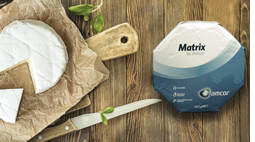
Amcor has been awarded with a Silver prize at the 2020 Packaging Innovation Awards, sponsored by Dow. The company has been recognised for its Matrix range, the industry’s first paper-based, paraffin-free and recyclable packaging for soft cheese.
This innovation of providing the right breathable barrier for soft cheese while removing paraffin has transformed a non-recyclable packaging material into a cheese wrap that can be recycled in the paper stream. Soft cheese continues to ripen after it is packaged, and this process needs to be managed through moisture absorption and gas exchange. Over the years, cheese producers have typically used paper packaging with a paraffin (wax) layer. While this offers some advantages, the paraffin can easily transfer to the cheese product, potentially impairing its taste. Using Matrix’s breathable technology, soft cheese producers can control the ripening process, delivering the right taste and texture to consumers throughout the cheese’s shelf life. The other challenge with traditional paraffin-coated packaging is it makes the paper hard to recycle. Amcor’s Matrix range is a more sustainable option thanks to its independently tested recyclability in the paper stream. Overall, the production and use of Matrix can reduce the packaging’s carbon footprint by 28%*. As a partner in the Ellen MacArthur Foundation’s New Plastics Economy, this innovation supports Amcor’s commitment to develop all its packaging to be recyclable or reusable by 2025. Additionally, Matrix extends the packaging material’s storage time up to 12 months compared to only six months for paraffin-based packaging. This helps cheese producers, which are often small businesses, to manage their packaging inventory and reduce material waste.
Part of 652 issue – November 20. All rights reserved except agreement written by Emballage Digest or mention of the magazine